
Why University Credit Transfer in 2026 Is Becoming a Big Win-Win for Students and working professionals!



Not everyone gets the opportunity to complete their degree in a smooth and perfect way. Many students and working professionals discontinue their education due to financial problems, career pressure, family responsibilities, relocation, health issues, or personal situations. Some people even leave their studies halfway and later struggle to continue their education while managing work and life responsibilities.
In 2026, education has become more flexible than ever before, and credit transfer courses are helping students, working professionals, and people who were unable to complete their degree continue their academic journey without starting again from zero.
Today, many people realise that completing a recognised degree can improve career opportunities, promotions, salary growth, higher education chances, and professional confidence. Because of this, university credit transfer programs are becoming increasingly popular across India.
From online degree continuation programs to flexible distance education options, credit transfer is helping thousands of learners save time, reduce educational gaps, and move closer toward completing their academic goals. Especially in Kerala, many students and discontinued learners are actively searching for trusted guidance regarding approved universities, degree continuation, and online credit transfer opportunities.
Credit transfer is an academic process where a student can transfer previously earned educational credits from one recognised institution or university to another. Instead of restarting the entire course from the first semester, students may continue their education from the stage that matches their completed academic credits.
In simple words, credit transfer helps students continue unfinished education without losing all previous academic progress.
For example, if a student completed a few semesters of a degree course but discontinued studies due to personal or financial reasons, the earned credits may be evaluated by another university. Based on eligibility and university policies, the student may receive admission to continue the remaining semesters.
This process is commonly used in:
Today, credit transfer is becoming increasingly relevant because education is becoming more flexible and student-friendly.
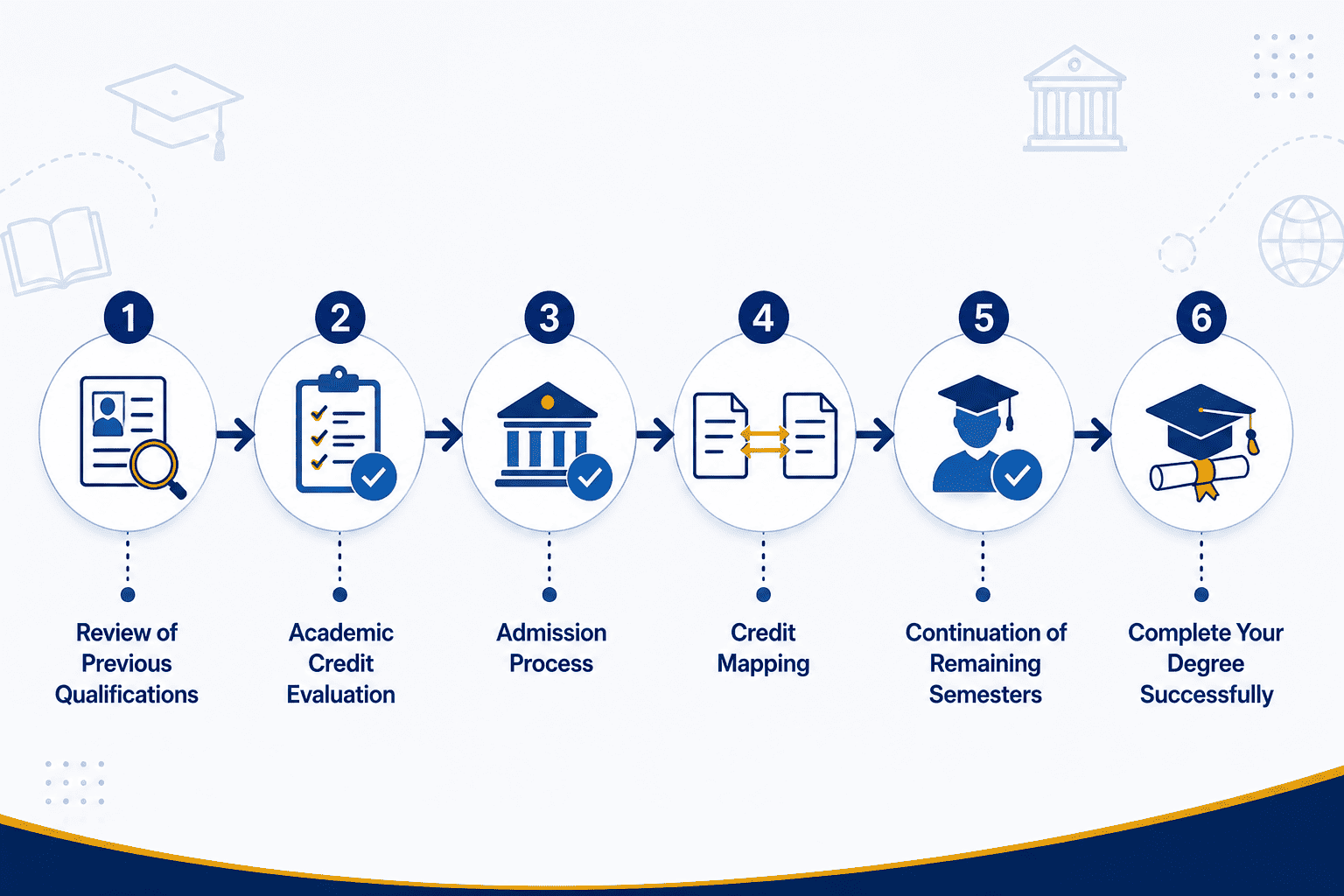
The credit transfer process may vary depending on the university and course structure, but generally the process follows a few important steps.
The student’s previous academic records, mark sheets, semester details, and discontinued course history are reviewed carefully.
The university evaluates how many credits the student has already completed.
This depends on:
After evaluation, eligible students may receive admission into a suitable program or semester based on university regulations.
Previously completed subjects are compared with the new university curriculum to identify transferable credits.
Once approved, students can continue the remaining part of the degree program instead of restarting from zero.
This process saves both time and effort for students who want to complete their education.
One of the biggest reasons for the growing popularity of credit transfer courses is flexibility. Modern education needs have changed, and most of the students are looking for practical learning options that fit their personal and professional lives.
Many private companies and organisations prefer candidates with completed graduation or post-graduation degrees. Credit transfer helps people complete pending education and improve career opportunities.
Some students discontinue education because of financial difficulties, health issues, family responsibilities, or relocation. Credit transfer gives them another opportunity to complete their education journey.
Working professionals often require degree qualifications for promotions, salary increments, or role upgrades. Continuing education through flexible programs becomes helpful in such situations.
Many students also explore higher education or career opportunities abroad. Having a completed degree from a recognised university can improve eligibility for various opportunities.
Online and distance learning options have made education more accessible than ever before.Students can now study while managing jobs or personal responsibilities.
Instead of restarting an entire course, students may continue from eligible semesters, which can save years of study time.
Completing only the remaining part of the course can reduce educational expenses compared to starting a new degree from the beginning.
One of the most common questions students ask is whether credit transfer is valid in India.
The answer depends mainly on university recognition and approval status. Students should always verify whether the university offering the program is recognised by the appropriate educational authorities.
Important recognitions may include:
Students should avoid choosing institutions without proper academic recognition.Students should avoid choosing institutions without proper academic recognition.
Validity and acceptance can vary depending on:
This is why proper guidance and university verification are extremely important before taking admission.
Asian Education Foundation helps students across Kerala by providing guidance and support for educational continuation programs and university selection.
 WHATSAPP NOW

Acceptance of credit transfer courses in India and abroad usually depends on the policies of individual institutions and universities. There is no single universal rule that applies everywhere.
Many universities evaluate:
In many cases, credits from recognised universities may have better acceptance possibilities compared to unrecognised institutions. However, students should always check directly with the college, employer, or university where they plan to apply in the future.
Students planning for international education should especially ensure that they choose recognised universities and maintain proper academic documentation.
The education system is evolving rapidly, and university credit transfer is becoming more relevant than ever in 2026.
Modern students prefer flexible learning instead of traditional rigid education systems. Credit transfer supports this flexibility.
Online education has become more accepted after the digital learning boom. Many universities now support hybrid and flexible learning models.
Educational reforms and evolving learning systems are encouraging more student-friendly educational pathways.
Working professionals increasingly prefer flexible education programs that allow them to study while continuing their jobs.
Students can complete pending education more efficiently without losing previous academic progress.
A completed degree may improve chances for employment, promotions, higher education, and professional credibility.

Online credit transfer courses are becoming increasingly popular because they provide flexibility and convenience for modern learners. Students, working professionals, and people who were unable to complete their degree can continue their education without leaving their jobs or disrupting their daily responsibilities. Many learners prefer online education because it allows them to study at their own pace while managing work, family, and personal commitments.
Another major advantage is affordability. Online learning can reduce travel, relocation, and accommodation expenses compared to traditional classroom education. Students from Kerala and different parts of India can also access educational opportunities without geographical limitations. For married students, working professionals, and individuals with busy schedules, online credit transfer courses offer a more practical and manageable way to complete their degrees.
Flexible timing, career continuity, affordability, and accessibility are some of the major reasons why online degree continuation programs are becoming increasingly popular in 2026.
Many students feel confused while selecting universities, understanding eligibility, or handling documentation for credit transfer admissions. Proper guidance can make the process easier and more transparent.
Asian Education Foundation helps students across Kerala by providing guidance and support for educational continuation programs and university selection.
The institution assists students with:
Asian Education Foundation guides students toward universities approved by UGC, AIU, DEB, and NCTE based on course requirements and eligibility criteria.
Many students and working professionals choose proper educational guidance because selecting the right recognised university is one of the most important parts of the credit transfer process.
Recognition depends on university approvals and institutional policies. Students should always verify university recognition before admission.
Credit transfer programs from recognised universities with proper approvals are generally considered more reliable than unverified institutions.
Acceptance varies depending on the university, country, and evaluation process. Institutions usually review transcripts and accreditation details individually.
Acceptance policies vary from one institution to another. Students should directly verify with the college or university.
Yes, many working professionals choose credit transfer programs to complete their pending degrees while continuing their careers.
Validity depends on university recognition and approval status. Students should always choose recognised institutions.
The timeline varies depending on documentation, eligibility review, and university procedures.
Connect with Asian Education Foundation for expert guidance regarding university credit transfer, Distance Degree, admission support, eligibility clarification, and recognised university options in Kerala.
Credit transfer courses are becoming an increasingly practical option for students, working professionals, and people who were unable to complete their degree and now want to continue their education without starting over from the beginning. In 2026, flexible education systems, online learning growth, and career-focused education pathways are making university credit transfer more relevant than ever before.
However, students should always verify university approvals, recognition status, and institutional credibility before making educational decisions. Choosing recognised universities and seeking proper guidance can make a major difference in the overall learning experience and future opportunities.
For students in Kerala looking for guidance regarding university selection, documentation, and educational continuation support, Asian Education Foundation provides assistance based on eligibility and recognised university options.